Thursday, 16 January 2014

Ellie's Favourite Chocolate Raspberry Brownies


There is something so dangerously moreish about these brownies - my eldest's favourite! The raspberries stop the brownies from being too rich and add a delicious fruity zing.I love them best when they have firmed up in the fridge.

200g dark chocolate 50-70% cocoa solids (not too high a % or the brownies will be too bitter)
150g unsalted butter
200g light, soft brown sugar
4 large eggs
75g plain flour
25g cocoa
200g fresh raspberries (or thawed frozen) - any similar berries will do - I have done this with mulberries and blackberries. It works best with berries that have a little acidity to them.
100g white chocolate
icing sugar to dust

Heat oven to 180C (160C in my fan oven). Melt the butter and dark chocolate together. I do it for 4 minutes on high in the microwave (1000 watt). Don't be tempted to stir the mixture until the butter and chocolate have completely melted and then do it very gently. Watch them carefully in the microwave - the chocolate burns easily and the whole thing can separate and go lumpy and inedible.


Leave to cool a little whilst you measure out the flour and cocoa and sift. Usually I don't bother with sifting flour anymore, we don't get flour weevils here (!) but with cocoa it is vital to ensure no yucky floury lumps in the baked cake.


...and then, whilst the chocolate continues to cool, whisk the eggs and sugar together until pale and very thick - like whipped cream, I do it for 3-4 minutes in my Kitchen Aid.


Now add the melted chocolate to the eggs gently.

 
Then fold in the flour and cocoa, don't beat too hard or you'll lose some of the air you've got into your eggs, seeing some remnants of flour like this is fine:
 
 
Next grease and line with baking parchment a 23cmx 23cm baking tray and fill with half the mixture, then dot the raspberries over the top of the mixture.
 
 
Spoon the rest of the mixture over the top of the raspberries, it doesn't have to be perfect, some raspberries can be peeping through the mixture.
 
Now chop the white chocolate into fairly large chunks. I always make the mistake of chopping them too small and then they melt into the mixture on baking and I lose the "crunch" which provides texture to something that could be too rich and dense without it.


Finally, pop the tray into the oven for 30 minutes. When cooked it should have a slight wobble in the middle and the top will look cracked, with the sides coming away from the edges. Leave to cool then dust with icing sugar and cut into squares. I like to keep them in the fridge.
 
Enjoy (as quickly as you can - they won't last long!)


Tuesday, 14 January 2014

Flapjacks


One day my youngest came back from school having had a school dinner complete with flapjacks that were "much better than yours Mum!", obviously I need to help him to fine tune his blatant honesty, but I wasn't surprised to hear his comment as for years I have tried to perfect my flapjack recipe, but they always ends up tooth-crackingly-crispy, or the complete opposite; a bit soggy and falling to pieces on each bite rather than holding together in a nice bar.

Inspired by a blog post by the wonderfully heartfelt Winwick Mum winwickmum.blogspot.com/  I spent a most pleasurable afternoon playing around with oats! This is what I came up with, and I think in the words of  Pygmalion's Professor Higgins "By Jove; I think she's got it!". I devised a basic flapjack that is soft and bar like on the inside AND crispy on the outside. The secret ingredient is the condensed milk. It is NOT healthy in the slightest (!) so as a nod to Winwick Mum, I took half of the made mixture (before baking) and added some healthier ingredients for my husband and I, in the vain hope that the children will be tempted to eat the healthier version! Ha! Who am I kidding?!

Ingredients
100g caster sugar
125g Demerara sugar
2 tbsp. golden syrup
2 tbsp. maple syrup
250g unsalted butter
200g sweetened condensed milk
1 tsp vanilla extract
450g rolled oats

1 grated apple
1 tbsp. dried apricots, chopped
1 tbsp dried cranberries (or your choice of dried fruit)
1 tbsp. pumpkin and sunflower seeds
1/2 tsp ground cinnamon

First melt butter in a large saucepan (it needs to be able to fit in the oats comfortably).


Next add the sugars and syrups and heat gently, stirring all the while, until the sugars have melted.


The next step is to weigh out the oats, and add them to the saucepan with the condensed milk and vanilla extract.


Give everything a good stir in the saucepan to coat the oats with the gooey mixture.


Grease and line a baking tray with greaseproof paper (my tray was  32cm x 18cm)


Take about two thirds of the mixture and press it into half of the baking tray using the back of a spoon.


Now grate the apple and add it to the remaining 1/3 mixture along with the dried fruit and seeds and ground cinnamon.


The reason for dividing the oat mixture 2/3 versus 1/3 is because the fruit and seeds add to the content evening it out. Pack this final mixture into the remaining room in the baking tray, remembering to press down with the back of a spoon.

Bake for 20 minutes at 180 C (or 160 c in my fan oven until starting to turn golden around the edges of the tray.


Immediately mark into bars - I cut mine into 30 littleish bars but you could cut it into any size you desire. Leave to cool in the tray, don't be tempted to take them out of the tray earlier as they tend to crumble. The seeded bars are moister because of the apple content. If you prefer them crisper then bake them in their own tray separate to the normal flapjacks for a further 5 minutes.


Munch and enjoy (ignoring totally the calorie content!). Here is a close up of the two varieties:


My youngest's verdict? "The flapjacks are delicious Mum, ALMOST as good as school's...." Ah well, I tried!


Thursday, 9 January 2014


The Environmental Toothbrush
Do you know how many people live in the UK now? In 2013 the figure was approximately 63.7 million. Now let’s assume that 400'000 of those are babies who don’t have teeth yet (bear with me all will become clear!). Assuming the remaining population change their toothbrushes 4 times a year following national guidelines, that means that in the UK we get through over 250 million toothbrushes a year. All of which end up in landfill. The plastic they’re made of won’t break down in our lifetime, nor within the lifetime of those aforementioned babies. Imagine that on a global scale.

I know you are all going to have sleepless nights worrying about this now, so fear not, I offer you a solution:
The Environmental Toothbrush
 
Invented by an Australian dentist, this Christmas I was given an Environmental Toothbrush (as you can see I get such exciting presents!). Made from bamboo, a natural cellulose fibre, it is biodegradable, environmentally sustainable, and does not pollute the environment. The growth rate and self-renewing ability of bamboo means that deforestation is not necessary either and another plus is that even the packaging is bio-degradable. It is available in a variety of sizes and for children too, from Amazon for £2.85 (Feb 2014) - a traditional toothbrush is around the same price. I for one intend writing to my chemist and supermarket to ask them to consider stocking them too.

My eco-friendly pearly whites are creating a glowing smile as I envisage the puzzled expressions of the manufacturers of The ET, as they contemplate their sales figures for the UK at the end of this year; as I just know you are all going to buy one now. My smile is even brighter as I imagine the panic of my friends and family reading this, whenever I come visiting I'll be asking to use your “little room”!
A version of this article is in The Record February 2014 (Reigate Park Church magazine) http://www.reigateparkchurch.org/

Monday, 6 January 2014

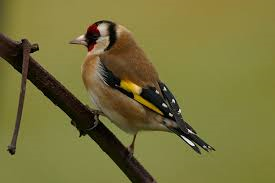
My Verbena bonariensis plants are smothered in goldfinches munching the seed-heads. A beautiful sight and the reason I don't tidy up my garden until the spring.

They are very sociable living in flocks - I count 9 together on one clump of the Verbena - and can migrate to the south of Spain from the UK in colder winters. They love thistle and teasels seeds too, which I have sown before for the birds but they were too thuggish - I know weed them out - sorry birdies! Perhaps I need to sow some again in a part of the garden I don't mind them growing in - perhaps near the compost heap? They are most common in the south of the UK, so I am feeling very blessed to see them in such numbers.


Adult Goldfinch


Sunday, 29 December 2013


Choices, choices! What Tomatoes am I going to grow this year?

The US Dept of Agriculture lists over 25.000 different varieties of tomato! How on earth to narrow down my choice from so many?!

One thing's for sure, I am going to be adventurous and experiment with all sorts of unusual types of tomatoes this year, as after years of lusting after one, I have finally got a greenhouse, inherited from a neighbour after 10 years of abandonment who was going to chuck it away, it was transferred  pane by pane lovingly into our back garden.

I am aiming for half a dozen or so different tomato varieties to grow: a couple of cherry varieties for salads, always so popular with my three children; a beefsteak for sandwiches and some medium sized flavourful varieties for tomato sauces. I always grow a couple of ‘Ferline’ plants for their blight resistance, just in case the crop gets it this year (sadly it usually does). I will also try to grow a variety of different colours and shapes, as they can look fabulous mixed together in a salad.

 BLIGHT RESISTANT VARIETY

Tomato Ferline

Tomato Feline


A description from the T&M website: In recent trials Tomato 'Ferline' has shown impressive blight tolerance in a garden situation, and resistance to fusarium and verticillium wilt. A useful variety for outdoor cultivation in even the wet summers! Grow these vigorous, indeterminate plants as cordons either under glass or outdoors, to produce heavy crops of deep red fruits of up to 150gm (5oz) in weight, with a very good flavour. Height: 200cm (79"). Spread: 50cm (20").

 CHERRY TOMATOES

Tomato Sungold


Tomato Sungold


I LOVE this tomato, incredibly sweet flavoured. I am very lucky that a friend’s Dad always raises a couple of these plants for me each year, I wouldn’t be without it. It has been voted Best in Class for flavour and has an RHS Award of Garden Merit. It is also celebrating 20 years of the sweetest tomato, as voted by gardeners. An outstanding cordon cherry tomato for glasshouse or outdoor culture, with an exceptionally high sugar content, that easily rivals ‘Gardeners Delight’, its attractive, golden-orange fruit is irresistibly sweet and juicy. The high yields of delicious fruit (each approximately 13g) are ideal for salads or as a tasty snack, my boys eat them straight from the plant. It also has good resistance to tobacco mosaic virus and fusarium wilt. Height: 200cm (79"). Spread: 50cm (20").

 Tomato Yellow Pear

Tomato Yellow Pear


Before my greenhouse, I could reliably grow this variety in a pot on my south facing patio against the house walls. It resists tomato blight well. The fruit size is about 5cm, and is an Heirloom variety. It has long, indeterminate vines producing a seemingly endless supply of mild flavoured, pear-shaped tomatoes all summer, they remind me of the old fashioned sweet shop pear drops – the yellow ones! The tiny tomatoes are borne in clusters and are one of the prettiest tomatoes in the garden. The vines can grow 2 m plus, so they need a tall support or place to ramble.

 
MEDIUM SIZED TOMATOES

Black Russian

Tomato Black Russian

Tomato Purple Calabash


I saw an episode of BBC2’s "What to Eat Now" where an avid tomato grower (100+ varieties grown every year) was asked to name her favourite tomato. She replied the Black Cuban. I hastily went online to track down the seeds before the masses descended, to discover that the variety has many different names (Black Russian or Krimm or Calabash to name abut a few). I already have an unopened pack of Purple Calabash so will be growing them alongside the variety Black Russian which I found on the Thompson and Morgan website to see if there is any difference, and of course to come to my own conclusions about the flavour. T&M describe Black Russian as: “A cordon variety, these medium sized black tomatoes grow on compact plants bearing plenty of dark mahogany-brown fruits, with a delicious blend of sugar and acid. Tomato 'Black Russian' is an old variety with a rich, complex flavour that has to be tasted to be believed. This variety is well suited to indoor or outdoor cultivation. Height: 200cm (79”). Spread: 50cm (20”).

Tomato Viva Italia

Tomato Viva Italia


Whilst doing some back ground reading/research before buying my seeds, I came across a great USA website called Vegetable Gardener Magazine The Vegetable Gardener - growing paste tomatoes which had an interesting article on growing paste tomatoes (or tomatoes to make tomato sauce from). The upshot was that the best tomato for sauce being Tomato Viva Italia. Now I am very aware this is for growing in the US, and that success varies on many factors, not least length of growing season, a major factor for me here in Blighty. I found the seeds on Amazon, so am beginning to wonder if the reason no UK seed companies sell it is because it doesn’t do well here. I am going to give it a go though! This tomato can also be eaten straight from the vine in salads as well as canned or made into sauces.

Well my intention was to grow this one, but I couldn't get the seeds after all, so I have decided instead to try TOMATO CUOR DI BUE COUER DE BOUEF OF LIGURIA from The Seeds of Italy Franchi website, These ones are recommended by Raymond Blanc and in the Gardeners World magazine.

Tomato Cuor di bue couer de boeuf of Liguria
 

BEEFSTEAK TOMATOES

Tomato Brandywine

Tomato Brandywine

I have some of this seed left over from a previous year which didn’t grow at all well – I don’t think I got any tomatoes at all, but as this is my first year using the greenhouse I am going to give it the benefit  of the doubt and give it another go! From the T&M website again a description: Tomato 'Brandywine’ is particularly recognisable for its unusual leaves that resemble potato foliage. Dating back to 1885, Tomato 'Brandywine' is regarded as one of the world’s finest flavoured 'beefsteak' tomatoes. This exceptional variety produces heavy yields of firm, clear skinned, light rosy pink fruits, often with slightly green shoulders. With a full, sweet flavour these fruits are delicious eaten fresh from the plant in salads, and sandwiches. This cordon variety is suitable for growing in the greenhouse or outdoors. Height: 200cm (79”). Spread: 50cm (20”). Surely that description alone warrants a second attempt?!

Wish me luck and many prayers for no blight infection this year! I’ll post an update on how they are growing and then how they taste next summer, and if any readers have some favourite varieties they grow then do leave a comment to suggest them as alternatives (or more likely additions - at this rate I'll need a bigger greenhouse!)

SEEDS, SEEDS AND MORE SEEDS!


It’s the week between Christmas and New Year, and for me that means only one thing; it must be time to decide what I am going to grow on my veggie patch next year; and then get busy ordering.


The problem is, I am ALWAYS swayed by the seductive descriptions in the seed catalogues, and end up ordering either something I have tonnes of packets of already, or something I have grown before that was a huge disappointment. For instance, who could possibly say no to “Courgette Sunstripe: a unique courgette with good yields of delicious golden yellow striped fruits that looks great when sliced!” or “Swiss Chard ‘Lucculus’: an abundance of deliciously succulent asparagus-like white stems”, I know I shan’t resist and yet I am the only one in my family who likes courgettes and even I don’t like the metallic taste of Chard!


This year I am determined to be more selective and restrained as I make my seed selections. To this end, I began documenting EVERYTHING I grow each year, with taste/yield comments at harvest time in the hope that as the years go by I will grow more and more of the crops that suit my site, and yet I will still be confident enough to try something new safe in the knowledge that I haven’t grown it disastrously before. I have also decided to only grow what I know the majority of this family of 5 will eat. Here is an example page:


Harvest Information


 The above mentioned Swiss Chard is a case in point. I religiously grow it every year, as it grows well on my soil and is SO pretty, particularly the Bright Lights variety, with its multi-coloured stems, but we all loathe it! And yet…..and yet……what if the Lucculus variety ISN’T metallic tasting? What if its asparagus flavour is the most delicious thing we have ever tasted?!


No! I must be strong! Resist!


So what will I allow myself to be tempted by this year? I am very excited that I finally have a much longed for greenhouse that I inherited from a neighbour who was about to throw it out. It was lovingly moved in the summer pane by careful pane (with their blessing I hasten to add!) and so any seeds I buy will be given priority with regards greenhouse growing. More on this topic with my next blog.

Saturday, 6 July 2013

Radishes

Really must get more organised and sow fortnightly and judiciously my radishes. I can't seem to resist the temptation to sow into every possible space and end up wasting so much seed that ends up growing to the size of hens eggs!

Wednesday, 3 April 2013

Potatoes

Who can resist a mound of fluffy buttery mash? I love it! Particularly atop a Shepherds Pie, but not unheard of eaten all by itself with thickly buttered toast - a carb frenzy!

Potatoes are said to be easy to grow, but not so in my experience, I try every year, though, come what may. My issue is the clay soil I garden on and the accompanying slugs, and the wireworm, potato cyst nematode, oh, and potato blight. Not impossible to grow but certainly needing some thought and trial and error.

Having said that, here is a picture of some potatoes I left for dead last year! The potatoes were dug up from a 4 metre x 1metre raised bed, that had overwintered and I was propping the bed for this year's sowings. I always grow 2 raised beds worth of spuds, and the other bed had been an unmitigated disaster. The blight struck early last summer probabaly because of the extreme rain and before I could take preventative action all the leaves were raised to the ground, and any potatoes found reduced to a slimy smelly blob. So I gave up on the other bed. Foolishly.

Pentland Dell and Charlotte potatoes 2012
 
These potatoes are a mix of last year's (2012) Pentland Dell and Charlotte. Both had no slug damage or potato cyst damage and were clearly not affected by last year's blight.
 
So how (and why?!) do I grow potatoes given the problems I face?
 
Why is simple, they are so utterly delicious and even more so straight from the plot. One word of warning when cooking home grown spuds though. Salad varieties, often yellow fleshed, such as Charlotte or Pink Fir Apple are perfect for cooking directly on harvesting, needing nothing more than tossing in butter and salt. Whereas the white fleshed floury varieties like King Edward will cook MUCH quicker than you are used to with supermarket varieies and will disitegrate to nothing if you take your eye off of them whilst cooking, ceratin varieties are also particularly prone to this like Pentland Dell.
 
As for how. It has been 5 years of trialling different varieties, carefully choosing varieties from seed catalogues that are bred to be resistant to my pests and diseases and soil. A helpful resource is The British Potato Variety Database http://www.varieties.potato.org.uk/menu.php
 
In one bed I grow varieties I now know will do well and in the other bed I try something different each year. I then keep records of what I grow and how well it has done (it is so easy to forget from one year to another).


So far on my clay soil, I have grown with success:
 
King Edward - a good allrounder and always gives me a lovely crop, although I lose about a quarter to slug, wireworm and potato cyst damage
 
Pink Fir Apple - my favourite! Knobbly salad variety, quite delicious with a buttery firm texture
 
Pentland Dell - Wonderful big allrounder crop that overwintered in the ground. Good mix of large and smller potatoes with no damage at all!
 
Charlotte - salad potato with little damage slightly smaller crop
 
Less successful:
 
Cara - too much wireworm damage and small crop
 
Irish Sceptre - Not as tasty as King Edwards and a smaller crop, with some slug damage
 
Duke of York - A red skinned variety large potatoes great baked, but only a tiny crop
 
Belle de Fontanay - useless! Loads of wireworm damage.
 
Lady Christl (chosen simply because it's name was so similar to mine!) - tiny crop, and lots of wireworm and slug damage
 
 
I garden organically and a helpful resource is Garden Organic. They do a Potato Factsheet http://www.gardenorganic.org.uk/factsheets/pc24.php more on how to grow in my next blog.


Thursday, 24 January 2013

Blog name change

I have decided to change the blog name to The Hairy Gooseberry from The Barefoot Gardener as I now realise that there is a rather popular blog in America with the same name - and want to avoid confusion. I am pretty sure there isn't another blog with this name - so named because my lovely Dad often quotes: "It's only the hairs on a gooseberry that stop it from being a grape" as a humorous antidote to heavier sayings that are now so prevalent on social media. It also suits the blog change, which is moving from purely gardening to gardening AND recipes made from produce from the veggie and fruit patch, with a sprinkling of life's musings, some thought provoking but mostly plain silly!

Thursday, 26 April 2012

Tulips

Tulips in the garden April 2012


Tulipa Golden Apeldoorn with the darker Tulipa Apeldoorn Elite.


Tulipa Angelique with the taller Tulipa Pink Impresion in front of some roses.


Tulipa Golden Apeldoorn with the lower Tulipa Helmar in fornt of Viburnum opulus.


Tulipa Montreaux in front with Tulipa Spring Green behind and Calamagrostis Overdam and the mounds of Geranium magnificum.


The stripey Tulipa Rems Favourite with Tulipa Negrita, some hellebores, the blue haze of Brunnera macrophylla 'Jack Frost' and a Sambacus nigra just coming into leaf.


Tulipa Queen of the Night and Tulipa Shirley.


Tulipa White Triumphator backed by some Narcissus Cheerfulness.


Tulips herald the beginning of spring, their many vibrant colours breaking the yellow, white and blue that seems to dominate in the preceeding few months. I try to pair them up with another tulip that flowers at the same time and compliments one another and yet contrasts (beware there are early, mid and late flowering varieties covering 3 months!). Another lovely touch is to pick out the colour of a nearby plant in the tulip, At this time of year I like to wander around the garden and take note of bare patches and plan what type of tulip to plant next atumn to fill the gap. I have a spot where I am going to plant some purple tulips near to some purple aubretia and the Tulipa White Triumphator. If I can find it Tulipa Dreaming Maid will pick out the purple of the aubretia and tone with the white tulips:


I am on very heavy clay soil and all wise gardening lore will advise to give up on most bulbs. I hope my pictures proove that it is possible! I have one patch behind one of the benches where all the bulbs seem to vanish, it is extremely wet there, I think they rot away, but everywhere else they seem to thrive and come back year after year building up their numbers too, and that without the addition of any grit, just copious amounts of garden compost on planting and a feed with Chicken Manure and a mulch of garden or mushroom compost in late winter every year. I have never had any success with parrot style tulips - not sure why, but I don't mind that as there is so much choice I don't think I will run out of colour combinations! They began flowering in early April and are still going strong as we are about to enter May when the oriental poppies, alliums and aqualegias will take over the display, and so the flowering year joyously continues.